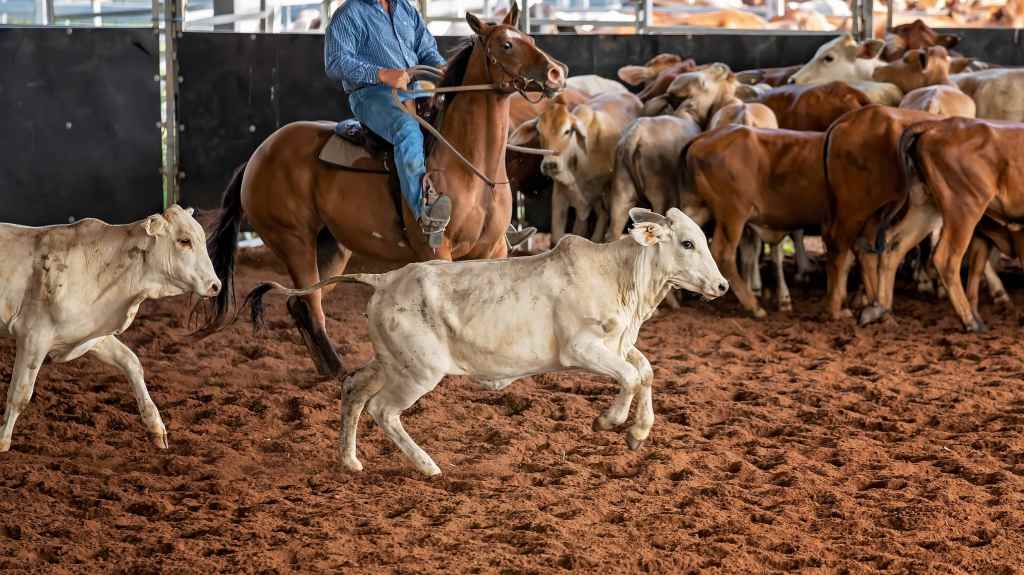
As the President of Richdel and an MBA candidate, I spend my days navigating the latest supply chain disruption and organizational behavior studies. Yet, my most honest performance reviews don’t come out of the office or classroom, they come from a cutting horse. In leadership, we often rely on titles to establish authority, but a horse is unimpressed by a resume. They respond to congruence: the alignment of your internal state with your external actions.
The science behind this is compelling. A 2020 study by Lanata et al., published in Scientific Reports, used wearable sensors to show that horses and humans experience heart rate variability (HRV) synchronization. If I enter the arena stressed about a supply chain issue or a poorly executed mid-term exam, the horse’s physiology mirrors that tension instantly. For leadership, this is a vivid reminder that “faking it” is a failed strategy when your team can subconsciously sense your lack of clarity.
My novice training with cutting horses specifically highlights the shift from command to influence, or what my trainer says is the “Ask”. Cutting is a sport of autonomy; the rider must provide the intent, then stay out of the horse’s way so it can “work the cow.” According to 2024 research from the Human Animal Bond Research Institute (HABRI), horses respond best to “positive pressure,” which is defined by the immediate release of tension once the desired behavior is achieved. In business, this translates to the power of psychological safety and knowing when to stop micromanaging so your experts can execute.
There is a necessary, and often humorous, humility in being a novice rider. It forces a level of “radical presence” that is often lost in our distracted corporate culture. A 2025 study in Frontiers in Veterinary Science found that equine-assisted training significantly boosts emotional intelligence (EQ) and self-awareness because it demands total focus. You cannot lead a high-performance animal while mentally drafting an email.
Ultimately, whether I am overseeing operations at Richdel or finding my center during a high-speed turn in the dirt, the lesson is the same: leadership is a state of being, not a set of tasks. When we lead with calm consistency and respect for the “athlete” in front of us, human or equine, the results are far more powerful than authority alone could ever achieve.
Call to Action: Have you ever received “unfiltered” feedback that changed your leadership style? Share your experiences in the comments below, and let’s discuss how we can bring more arena-style authenticity to the workplace.
References
Lanata, A., et al. (2020). “How horses feel human emotions: Evidence from heart rate variability.” Scientific Reports. https://www.mdpi.com/2076-2615/9/12/1030
https://www.mdpi.com/2076-2615/9/12/1030
Human Animal Bond Research Institute (HABRI) (2024). “New Research to Examine Benefits of Equine-Assisted Services for Physiological Self-Regulation.”
https://habri.org/pressroom/20241021
Frontiers in Veterinary Science (2025). “Equine-assisted learning and leadership transformation: an exploratory qualitative study of workplace behavior.”
https://www.frontiersin.org/journals/veterinary-science/articles/10.3389/fvets.2025.1700029/full
MDPI (2025). “Equine-Assisted Experiential Learning: A Literature Review of Embodied Leadership Development in Organizational Behavior.”

 Supporting Healthier Animals & Developing Successful People