
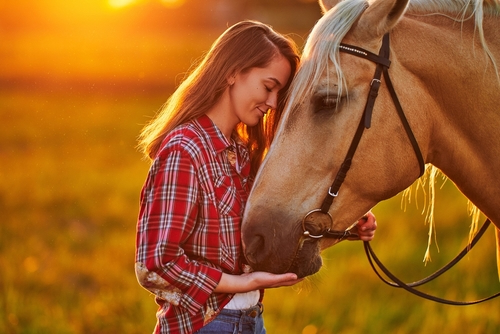
Well, science finally has an answer. Or, at least, a very well-researched hypothesis published in the Journal of Equine Veterinary Science. A recent study under review titled “Horses Prefer Their Rider: A Strange Situation Test Adaptation Shows Behavioral Evidence for Partner-Specific Bonding” decided to tackle this age-old mystery. Here is a breakdown of what they found, minus the heavy academic jargon.
The Setup: The “Strange Situation” Test
The researchers adapted a psychological method called the “Strange Situation Test” (SST). Originally, psychologists used this test on human toddlers and domestic dogs to see how attached they are to their primary caregivers. In this equine version, they took 30 horse-rider pairs and put them in an indoor riding arena. The test involved a series of mildly dramatic episodes:
- The rider recalling the horse
- A complete stranger (an experimenter) recalling the horse
- Leaving the horse completely alone (separation)
- The human returning (reunion)
- Introducing a “scary object”
Here is what our four-legged friends revealed about how they view their humans:
1. Good News: They Actually Like Their People! If riders were worried their horse would just as happily trot off with any human as long as they had carrots, they can relax. The study showed that horses approached their specific rider significantly faster than the unfamiliar experimenter during the recall and reunion phases. Furthermore, they chose to spend significantly more time in close proximity to their rider across the different episodes. Partner-specific bonding is real!
2. The “Stare” Doesn’t Mean Love (Action Beats Familiarity) If an equestrian ever feels a pang of jealousy catching their horse staring at a stranger, they shouldn’t worry. The researchers found that horses’ gazing patterns were driven more by human interactiveness than by familiarity. Basically, horses pay attention to whoever is actually moving or doing something. They aren’t gazing at a stranger with longing; they are just keeping an eye on the unpredictable human.
3. Every Horse for Themselves This is perhaps the most fascinating part of the study. The researchers wanted to see if the rider acted as a “safe haven.” When a toddler gets scared, they run to their mom; when a dog gets scared, it hides behind its owner. If a horse gets scared… well, they just want to get away from the scary thing.
During the “scary object” episode, no clear safe-haven effect emerged. When spooked, the horses didn’t run to their riders for a reassuring hug; their ancient prey-animal instincts kicked in, and they just wanted to put distance between themselves and the threat. Panic, it seems, is an equal opportunity emotion.
4. Demographics Don’t Matter Does a horse care if their rider is a man or a woman? Nope. The study explicitly noted that the rider’s sex had absolutely no effect on the horses’ social or stress-related behaviors. They just care that you are their human.
The Bottom Line
This study highlights that the bond humans build with horses goes far deeper than just conditioned familiarity. These animals show clear attachment-like patterns toward their regular riders, seeking their proximity and choosing them over strangers.
If you’re as fascinated by this as I am, there’s a whole world of research opening up on equine-human attachment. Here are a few other great reads to check out while you avoid whatever spreadsheet you’re supposed to be looking at:
- Is Equine Attachment Real? (Psychology Today): A deep-dive into whether horses genuinely experience “missing” their humans and how brain-based horsemanship relies on these emotional connections. Is Equine Attachment Real? (Psychology Today)
- Equine-Assisted Therapy and Human-Animal Interaction: The Human Animal Bond Research Institute (HABRI) offers incredible insights into how the emotional connection between horses and humans is actively used in therapy and healing. Equine-Assisted Therapy and Human-Animal Interaction
When looking at a dedicated equestrian and their mount, one has to wonder: Does the horse actually feel affection for its rider, or is the human merely a highly efficient feed-delivery system? Let me know your thoughts in the comments section below.

 Supporting Healthier Animals & Developing Successful People