
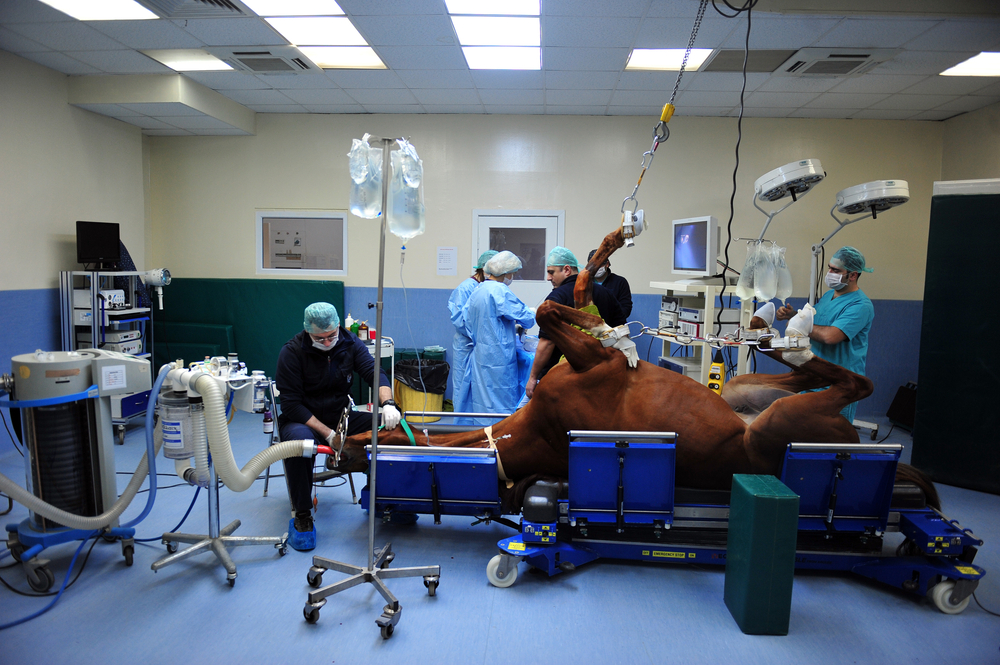
Image by Shutterstock
Colic is the word that keeps every horse owner up at night. As President of Richdel and an MBA candidate at UNR, I tend to look at challenges through two lenses: the biological necessity of the horse and the strategic frameworks we use to manage their health.
A recent scoping review in the Journal of Equine Veterinary Science (2026) reinforces what we’ve long advocated at Richdel: when it comes to post-colic recovery, nutrition isn’t just a support role, it’s a modifiable cornerstone of survival.
The Data-Driven Shift: Feed Early, Feed Right
For years, the “industry standard” often leaned toward prolonged fasting after a colic episode. However, the data is shifting. The review highlights that early reintroduction of enteral feeding (within 12–24 hours post-op) is linked to faster recovery and shorter hospital stays.
From a management perspective, waiting for “perfect” bowel sounds before feeding is an outdated metric. Instead, the strategic priority is maintaining enterocyte function and microbiome stability through a forage-based approach.
The “Feed Pyramid” Framework
The researchers propose a physiology-based “Feed Pyramid” that mirrors the strategic allocation of resources we use in business:
- The Foundation (Forages): Long-stem forages should make up the bulk of the diet to stimulate motility and support the core microbiota.
- The Middle (Energy): This section includes concentrates and oils, used only as needed to balance energy requirements without overloading the system with starch.
- The Apex (Supplements): While the smallest in volume, these are essential for balancing mineral deficiencies (like Sodium and Selenium) and supporting tissue repair through Vitamins A and E.
Avoiding the “High-Starch” Trap
One of the most critical takeaways for any owner is the danger of high Non-Structural Carbohydrates (NSC). Evidence shows that high-NSC feeds increase the risk of dysmotility and colic recurrence. In the recovery phase, we should target less than 2 g of starch per kg of body weight daily to prevent hindgut acidosis and protect the fragile microbial ecosystem.
The Bottom Line
At Richdel, our mission has always been about precision and quality. This research confirms that “doing no harm” means respecting the horse’s herbivorous nature, even—and especially—after a medical crisis. By moving away from empirical “habits” and toward evidence-based nutritional protocols, we aren’t just managing a recovery; we’re protecting an investment in the horse’s long-term health.
Call to Action: Is your recovery plan evidence-based? Review your stable’s post-colic protocols today and ensure the “Forage First” foundation is at the heart of your strategy. Let me know in the thought below.
References
- Danese, T., et al. (2026). Clinical nutrition in equine colic: a scoping review from an equine nutritionist’s perspective. Journal of Equine Veterinary Science. https://doi.org/10.1016/j.jevs.2026.105852
- Valle, E., et al. (2019). Preliminary results on the association with feeding and recovery length in equine colic patients after laparotomy. J Anim Physiol Anim Nutr. https://pubmed.ncbi.nlm.nih.gov/31025443/
- Lawson, A. L., et al. (2021). Equine nutrition in the post-operative colic: Survey of Diplomates. Equine Vet J. https://pmc.ncbi.nlm.nih.gov/articles/PMC8451781/

 Supporting Healthier Animals & Developing Successful People