

Image by Shutterstock
Returning home from UNR’s Nevada Global Business program in Tokyo, I find myself looking at executive leadership through an entirely new perspective. Spending time in one of the world’s most dynamic economic hubs is more than just an academic milestone; it is an exercise in broadening your horizon and challenging baseline assumptions about corporate strategy. For American executives, it is easy to become insulated within our own domestic markets and management styles. Stepping outside the United States forces us to embrace cultural humility, proving that some of the most meaningful insights occur when we leave our comfort zones to understand how foreign business environments solve complex problems.
The first thing that strikes any visitor to Tokyo is its breathtaking scale. Navigating a metropolitan area of over forty million people, one might naturally brace for the chaotic energy and conflict typical of dense cities. Instead, Tokyo reveals a mesmerizing rhythm of order, efficiency, and profound civility. Whether watching thousands of commuters glide seamlessly through a major transit hub or seeing how clean the streets remain despite a total absence of public trash cans, the city functions on a foundational expectation of personal responsibility. As executives, we often try to enforce compliance through rigid corporate rules, but Tokyo demonstrates the immense power of shared cultural alignment where individuals look out for the collective good. It is a powerful reminder that organizational culture, when built on mutual respect, can manage massive operational complexity far better than heavy-handed oversight.
This societal discipline mirrors the Japanese approach to business, which offers invaluable recommendations for Western leaders. In the United States, we are frequently trapped in a cycle of short-term planning driven by immediate quarterly returns. Conversely, the organizations we engaged with in Japan build their strategies around long-term sustainability, deep collaboration, and continuous improvement. This philosophy requires intense process discipline and systems thinking, where every individual is empowered to refine operations incrementally. Experiencing this firsthand highlights a critical lesson for modern executives: long-term institutional health and customer trust must never be sacrificed for temporary gains. By blending traditional values of commitment with modern approaches to employee well-being, Japanese companies show us how to navigate evolving workforce expectations gracefully.
A fascinating example of these shifting cultural and business dynamics can be seen in Japan’s companion animal health sector, a market that illustrates both the immense opportunities and unique hurdles of operating abroad. Due to long-term demographic trends, Japan is experiencing a historic reality where pets actually outnumber children under the age of fifteen. This demographic inversion has fueled an extraordinary wave of pet humanization, with owners viewing their dogs and cats as cherished family members and investing heavily in their advanced healthcare, premium nutrition, and overall quality of life. For international animal health executives, this represents a booming market for high-tech diagnostic imaging, specialized oncology treatments, and subscription-based wellness plans. The deep-seated consumer desire for premium quality opens significant doors for innovative foreign businesses ready to provide world-class care.
Yet, capturing these opportunities requires a deep understanding of local challenges that can easily trip up an unprepared or incapable business plan. While spending is up per animal, the overall pet population is gradually plateauing, creating a fiercely competitive landscape. Furthermore, Japan’s regulatory framework is notoriously stringent, often presenting lengthy approval lags for novel diagnostics and pharmaceuticals through the Ministry of Agriculture, Forestry, and Fisheries. Combine this with severe labor shortages among veterinary staff and rising metropolitan operating costs, and it becomes clear that entering this space demands a patient, localized strategy. You cannot simply copy-paste an American business model into Japan and expect it to thrive; you must honor their regulatory rigorousness, build local partnerships, and demonstrate an unwavering commitment to safety and quality.
Ultimately, my journey with the Nevada Global Business cohort reinforced that effective leadership takes many different forms around the world. True global acumen is not about arriving with all the answers, but rather asking the right questions with a sense of genuine curiosity. Long-term corporate success is built upon trust, meticulous discipline, respect for others, and a relentless commitment to quality. By stepping outside our borders and studying how other cultures operate, we return to our own organizations as more empathetic, strategic, and innovative leaders.
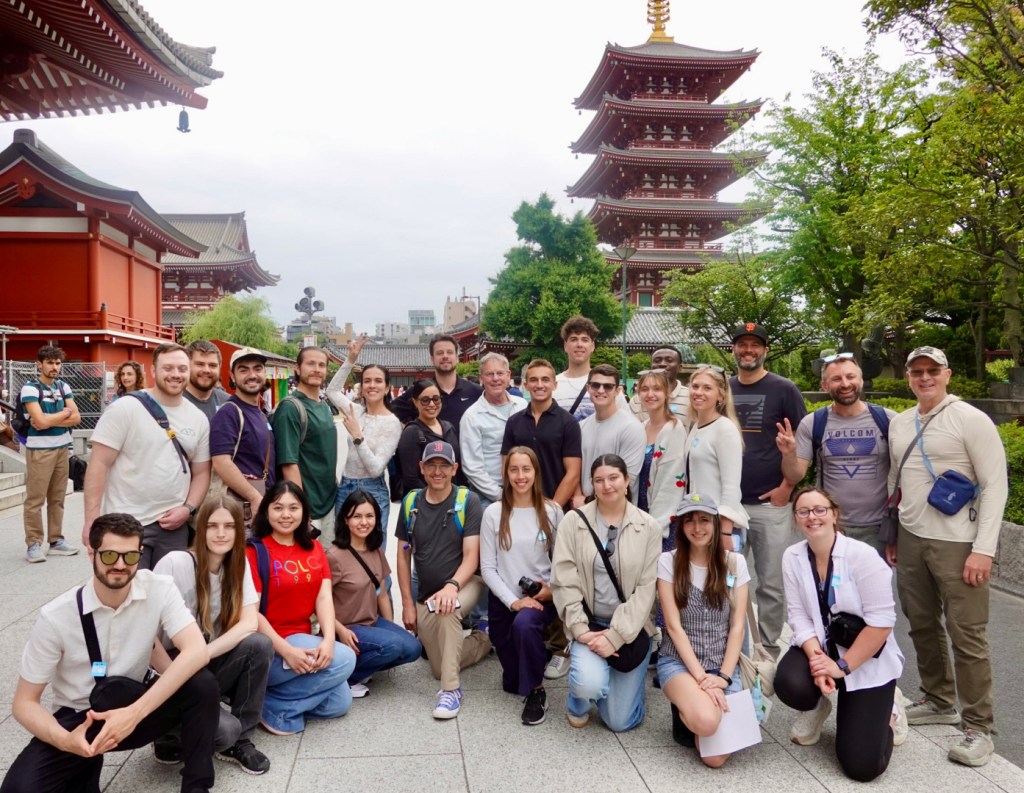
2026 University of Nevada NGB Tokyo Cohort


