
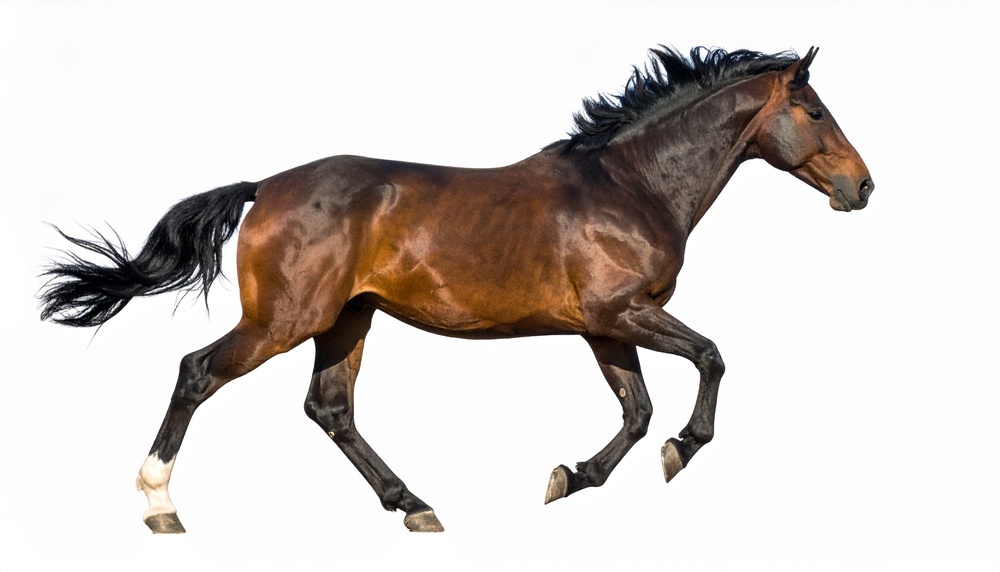
Image by Shutterstock
If you’ve ever watched a horse move with effortless, floating suspension, you’re witnessing a remarkable feat of structural engineering. Every stride depends on a finely tuned system built for strength, elasticity, and resilience. As President of Richdel, Inc., my focus has always been helping horse owners support that system with products they can trust. At the same time, my MBA studies at the University of Nevada, Reno have pushed me to look deeper, beyond traditional ingredients and into the science shaping the future of equine performance. At the center of that conversation is collagen.
Collagen is the primary structural protein in a horse’s body, making up roughly 25–30% of total protein mass. It forms the foundation of tendons, ligaments, and cartilage. Think of these tissues like a high-tension rope: collagen provides the individual fibers that keep everything strong and intact under the stress of movement, whether that’s a gallop, jump, or tight turn.
But when it comes to joint health, not all collagen is created equal. Type II collagen plays a specialized role in cartilage, acting as the cushion that allows joints to absorb impact and resist compression. Chicken derived collagen stands out because it is naturally rich in this form and highly bioavailable, meaning the horse can efficiently absorb and use it. When hydrolyzed, collagen is broken down into small peptides that are easily absorbed in the gut and help signal the body to support its own cartilage production.
For years, the industry has relied on the “Big Three”; glucosamine, chondroitin sulfate, and MSM for joint support. These ingredients help supply the building blocks for joint fluid, and they still have value. But emerging research suggests collagen may play a more direct and influential role.
In clinical comparisons, horses supplemented with Type II collagen have shown reduced arthritic pain and improved limb flexion compared to those on traditional glucosamine and chondroitin programs. While the Big Three ingredients provide the raw materials, collagen supports the structure itself acting as both the framework and the regulator by helping modulate immune responses that contribute to joint inflammation.
Recent findings continue to reinforce this shift. Early 2025 research on trained foals showed that daily supplementation with hydrolyzed collagen reduced inflammation markers and helped protect against joint degeneration during early training. That’s significant, it points to collagen not just as a recovery tool, but as a proactive strategy for long-term soundness.Human studies on similar chicken-derived collagen have also reported meaningful reductions in joint discomfort and stiffness, suggesting consistent benefits across species.
The takeaway is straightforward: while traditional supplements still have a place, hydrolyzed Type II collagen offers a more targeted, science-backed approach to supporting joint integrity. It delivers key amino acids like hydroxyproline, essential for rebuilding connective tissue, while also helping quiet the inflammatory processes that lead to stiffness and wear. Whether you’re supporting a seasoned performance horse or developing a young athlete, investing in structural health early can make all the difference.
What is your “go to” joint support ingredient for your horse? Let me know in the comments below.
Supporting Research and Links:
Comparative Efficacy Study (Collagen vs. Glucosamine/Chondroitin):
https://pubmed.ncbi.nlm.nih.gov/20444013/
2025 Foal Inflammation Study:
Hydrolyzed Chicken Collagen Trial:


